November 5–6, 2026 | Tbilisi, Georgia
On November 5–6, 2026, the One Health Institute (OHI) at the University of Georgia, in collaboration with the National Institute for Public Health and the Environment (RIVM, the Netherlands) and the European One Health Association (EOHA), convened an international workshop entitled “Strengthening One Health Networks: Advancing Strategic Cooperation Between Georgian and European One Health Sectors.”
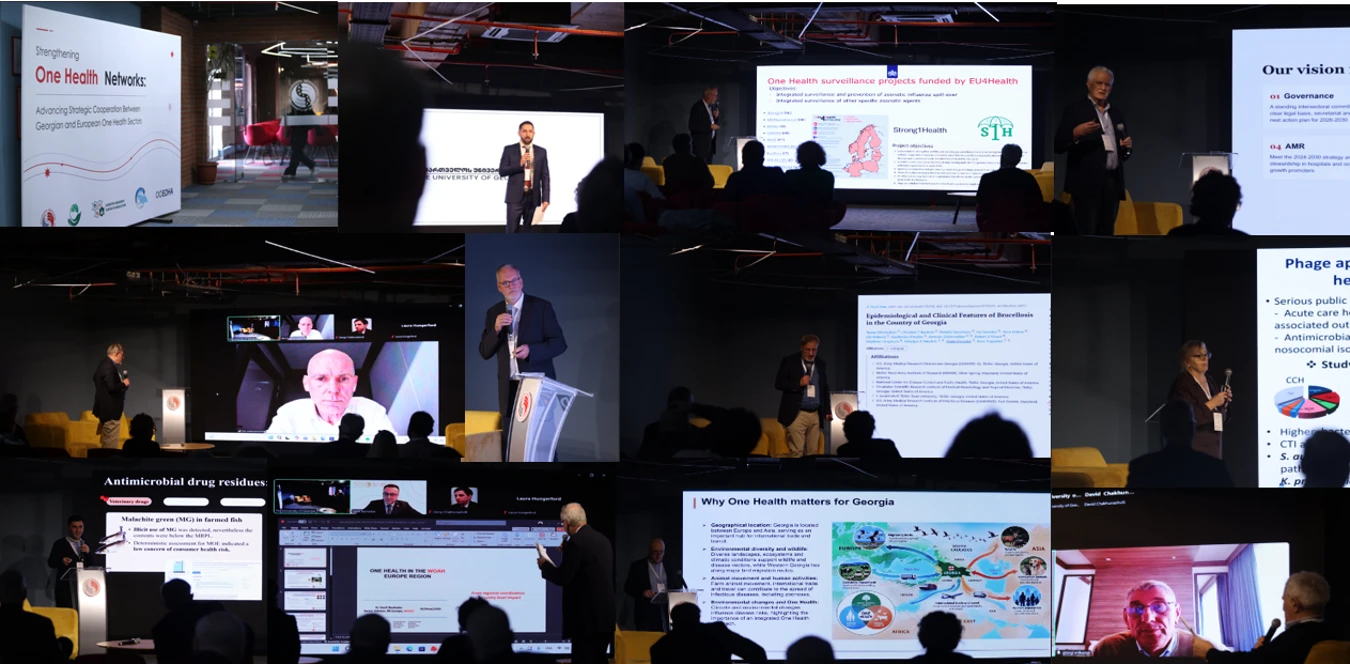
Held at the University of Georgia in Tbilisi in a hybrid format, the two-day workshop brought together researchers, scientific experts, and representatives of national and international institutions to examine key One Health challenges, exchange scientific knowledge and expertise, and identify opportunities for strengthening international research partnerships and intersectoral collaboration.
The workshop commenced with welcoming remarks by Mr. Konstantine Topuria, Rector of the University of Georgia. The scientific programme comprised three thematic sessions addressing global and regional One Health priorities, the development of collaborative research partnerships, and the integration of scientific evidence into policy and practice.
Georgian scientific and governmental institutions contributed expertise across several key One Health domains. George Chakhunashvili and David Chakhunashvili (National Center for Disease Control and Public Health) addressed genomic surveillance, early warning systems, and One Health education. Levan Tsitskhishvili (Scientific Research Center of Agriculture) presented ongoing research activities within the One Health framework, while Amiran Gamkrelidze (University of Georgia) discussed strategic priorities for advancing One Health initiatives and strengthening international scientific cooperation.
Additional scientific contributions included presentations by Nelly Datukishvili (Ilia State University) on molecular diagnostic approaches in food and environmental monitoring; Marina Tediashvili (University of Georgia and G. Eliava Institute) on the potential applications of bacteriophages as alternatives to antibiotics; Mamuka Kotetishvili (One Health Institute, University of Georgia) on challenges related to scientific data management and intersectoral collaboration; and Giorgi Mikadze (Ministry of Environmental Protection and Agriculture of Georgia) on the relationship between food safety policy and scientific research.
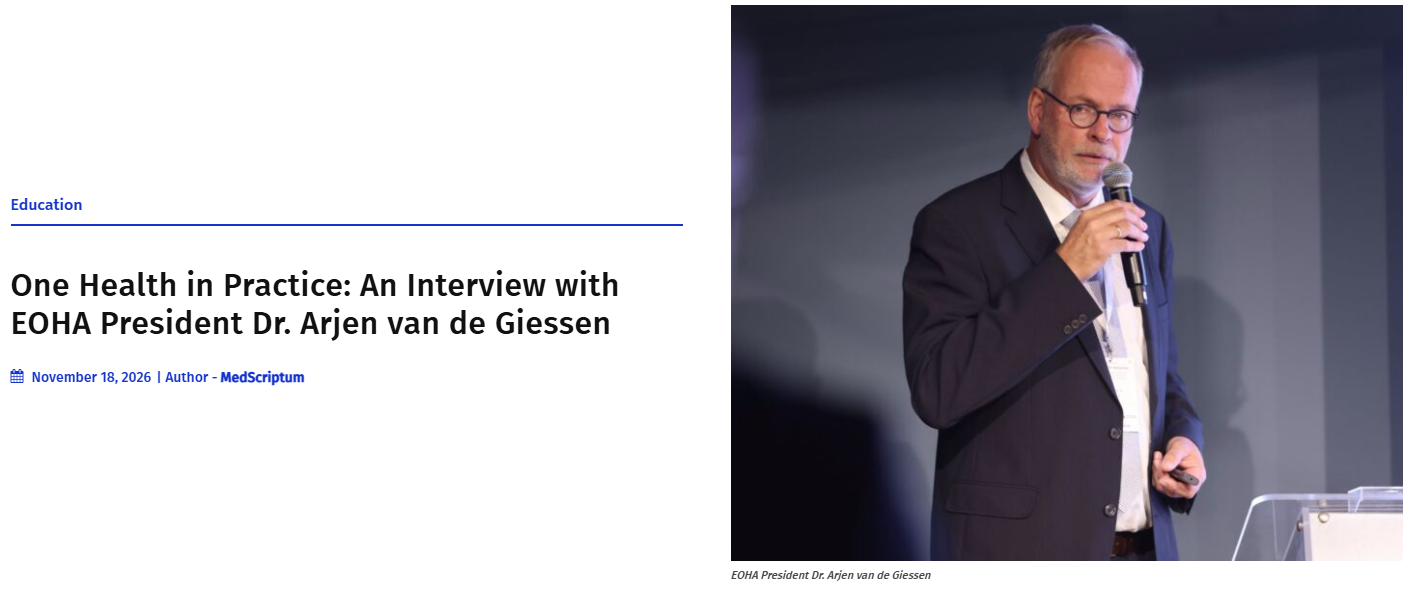
International experts contributed perspectives on established practices, emerging priorities, and opportunities for scientific cooperation. Arjen van de Giessen (EOHA and RIVM, the Netherlands) shared experience in zoonotic disease surveillance, antimicrobial resistance, and the implementation of One Health approaches within the European Union. Hein Imberechts (EOHA and Sciensano, Belgium) examined European One Health research partnerships and collaborative scientific initiatives, while Vasil Basiladze (World Organisation for Animal Health, WOAH) addressed regional coordination mechanisms and the implementation of One Health approaches at the national level.
The scientific programme also included contributions from Davit Pipoyan (CENS, Armenia), who presented approaches to food safety risk assessment, and Laura Hungerford (Virginia–Maryland College of Veterinary Medicine, USA), who examined One Health perspectives involving multispecies families and the interconnected dimensions of human and animal health.
The thematic presentations and interactive roundtable discussions highlighted the importance of coordinated scientific research, harmonized methodological approaches, effective knowledge exchange, and strengthened collaboration across the human, animal, and environmental health sectors. Particular emphasis was placed on fostering interdisciplinary dialogue, facilitating the exchange of expertise, and identifying opportunities for collaborative research and evidence-informed decision-making.
The workshop provided a platform for scientific dialogue among Georgian and international One Health stakeholders, facilitating discussions on shared priorities and potential avenues for sustainable research partnerships. These exchanges contributed to ongoing efforts to strengthen institutional connections and promote coordinated approaches to complex health challenges at the human–animal–environment interface.
The event was co-organized by the National Center for Disease Control and Public Health, the Scientific Research Center of Agriculture, and the G. Natadze Scientific-Research Institute of Sanitary, Hygiene, and Medical Ecology.
The workshop was supported through the One Health Strengthening Europe (OHSE) project, funded by the Dutch Ministry of Health, Welfare and Sport and coordinated by RIVM in cooperation with EOHA.